
How Do I Get My Lawn Ready for Cold Weather?
As December days pass, those of us in the Southwest, especially Albuquerque, NM, are relishing in the above average temps but mustn’t get used to it. Despite having an abnormally warm Fall this year, it seems that January and February could bring us a doozy of a Winter.
Most of the country east of the Rockies will experience colder-than-normal winter temperatures, while the Southwest will see warmer-than-average temperatures.
Snowfall will exceed normal levels if La Nina halts its present weather pattern. This could entail that in January and further into winter snow might be expected in the weather report.
You bet that means you better be buying rock salt while you have the chance, keeping an ice scraper in your car, and ensuring your snowblower is up and active. And, see if the snow shovel in the garage needs to be replaced. Addressing these now can help save you some money and headache later when they are more in demand and harder to come by.
Preparing for the imminent Winter weather in these ways is important, but do not forget to prep your yard also for chilly temps and heavy snows. Yard work before our lawns go dormant may seem odd, but doing so will ensure healthier looking lawns in spring as we head into Winter.
Remove Leaves from Your Lawn
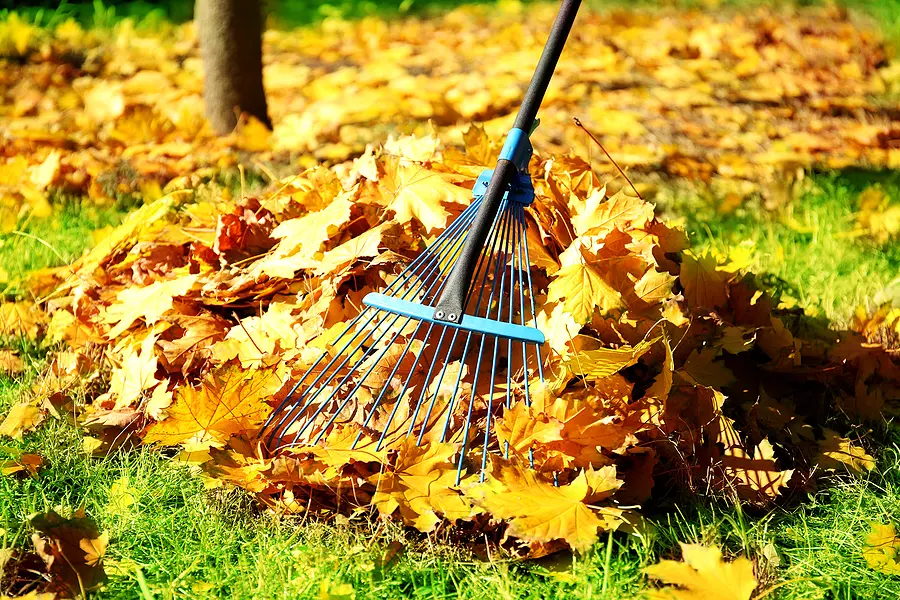
One chore you probably hate is the fall yard cleanup – and for most people, the number one reason why is raking leaves. For many it might seem like a good idea to just leave them on your grass and hope they decompose before Spring, a terrible idea for many reasons.
You want grass blades to have maximum sun exposure before your grass goes dormant so that they can store food reserves in their roots. More food reserves help the grass survive the Winter.
Besides being a refuge for insects and disease, leaves which are packed under snow for months are just a pain to clean up in the Spring.
Keep this in mind; it’s advisable to clear up the leaves as soon as they land!
Fertilize Cool-Season Grass
It might seem odd to feed your grass just before winter, but this is the most important time of year to fertilize your lawn if you don’t have cool-season grass(es).
Your lawn is recovering from the summer heat and gearing up for Winter in the Fall. Now is the ideal time to feed it to help it recover from the stresses of Summer and to start strengthening it to get through until Spring.
This type of fertilization allows them to survive the winter, by creating reserves in:
Nitrogen which induces development of leaf blades and increases density of turf. This means more food stores as well as a better green-up in the Spring.
Potassium, which assists the grass in withstanding environmental stressors, thus fortifying it for cold weather.
Phosphorus promotes increased development of roots and translocation of energy reserves into the roots for storage.
You’ll want to use a high nitrogen fertilizer such as a 30-0-4 or 25-5-5, or a balanced fertilizer such as 12-12-12 as soon as possible. For your grass to take advantage of it as early as possible, the best is to fertilize before your blades begin to brown.
Don’t Fertilize Warm-Season Grass
The following suggestion is for homeowners who live in the transition zone or south of it. Conversely, if your lawn is made up of warm-season grasses, you don’t want to treat it with the same fertilization as cool-season grasses.
In late Fall, warm season grasses require only a potassium dose as they don’t require high nitrogen levels in preparation for a cold Winter. Excessive nitrogen application causes the grass to continue to grow rather than inducing a dormant state.
Here is a suggested fertilizer schedule for those growing warm- season grasses.
- Use high potassium producing such as 0-0-18 (potash) or 4-3-20.
- Do not apply more than 1 pound of potassium per 1000 square feet of lawn.
Fertilization can be done when the growth starts to decline, but the blades remain green. The roots are still active and more open to the nutrients.
Fall Lawn Aeration
There’s a good chance the soil has compacted some after mowing your grass all Summer and having kids and pets run across it. Aerating cool-season grasses during the Fall alleviates this soil compaction allowing water, air, and nutrients – particularly the fertilization done in the Fall – to penetrate the soil and promote grass growth.
Aeration can be done two different ways, spike or core. The most effective method is core aeration, which physically removes small cores of soil, and grass from the lawn. These holes allow for better gas and water exchange as well as less compacted soil. You can rent an aerator and do it yourself or hire a professional lawn aeration service. If you can, aerate prior to fertilizing; this will allow for the fertilizer to penetrate the soil more readily.
Watering Your Lawn in the Fall
The biggest blunder homeowners make in the fall, is discontinuing watering their grass. Even though temperatures are falling, your lawn is still growing and thus requires regular watering. It leverages this water to recover from summer, and to aid in preparation for dormancy.
You should also plan to remain on your regular watering schedule, providing one inch of water to your lawn each week, either through irrigation or rain. In cases where the grass has browned out, this schedule can be adjusted to an inch every 10-14 days. As a rule of thumb, stop watering when you start to have regular freezing temperatures.
Keep Mowing Until Grass Goes Dormant
You might be surprised when your lawn really begins to grow when the temperatures begin to drop—that’s just how cool-season grass grows. Just like watering, you want to mow your grass until it starts to go dormant. Equally important is to continue cutting it at the recommended mowing height rather than scalping it down short. Shortening it causes stress and that’s the last thing you want before Winter.
When frost or snow is a regular occurrence, the mower deck should be set at a height suited to your grass type.
Trim Large Trees
Beyond your grass, Fall is in fact the perfect time to prune your trees as well. Particularly those that have large, heavy branches that hang near your home or garage. Branches with heavy, wet snow can break under the additional weight if this is the sort of snow predicted. Properly cutting them back can prevent costly insurance claims over Winter.
Spot Treat with Weed Killer
In the Fall, your grass is efficiently moving material from the blades down to the roots where it is stored for Winter. Which makes it a prime time to spot treat the weeds that may be troublesome. Upon application the herbicide is systemic and much more lethal by moving through the plant and killing the weed.
In addition, if you treat your lawn for weeds in the fall your grass enjoys less competition in the Spring and will fill in as it begins to grow.
Throw Down Grass Seed
Autumn is also a great time to renew a thinning lawn or repair unsightly bare patches by seeding new grass. The advantages of overseeding now are that it lessens the likelihood that weeds will migrate in and take over, and, when temperatures are cooler, seed germinates easily and grows easily.
Replenish Worn Out Mulch
One other thing you will want to do is change the mulch in flower beds and around your trees before Winter sets in. Besides making your landscape look nice, the added layer of material insulates the plants and protects the roots. In the Spring, you will see less winter die-back.
Stay Off the Lawn When It’s Too Wet
Finally, if Fall rains leave your soil wet, limit foot traffic on the lawn. One of the downsides of walking over it while it is wet is that it can compact the soil and this will undo the money and time you just spent on aeration!
Also, you shouldn’t rake when the ground is too soft, because that would risk pulling out grass roots.
Need Help Preparing Your Lawn for Cold Weather?
We know that fall is one of the busiest times of the year and that your “to do” list may be longer than you have time to complete.
If so, let the experts at ASAP Sands Outdoor Services take care of it for you! Let our trained service professionals lighten the load with beautiful fertilization, aeration, weed treatments, tree trimming and so much more! Reach out to us today for your Free Estimate!
